
Meron and wala are the two sides of every sabong match, and understanding how the odds work between them is the foundation of e-sabong betting at ArionPlay. You pick a side before the fight, the roosters compete in the pit, and the winning side pays out based on the live odds set by the kristo before the betting window closes. This guide explains what meron and wala mean, how llamado and dejado affect the odds, what logro is, and how payouts are calculated for each result.

Meron Wala Quick Stats
| Meron side | The designated favourite — rooster placed on the right side of the pit |
|---|---|
| Wala side | The opposing entry — rooster placed on the left side |
| Draw / Empate | Third outcome — both roosters unable to finish; partial refund applies |
| Llamado | The betting favourite, regardless of meron or wala position |
| Dejado | The betting underdog |
| Logro | The commission deducted from winning payouts |
| Platform | ArionPlay E-Sabong |
What Is Meron & Wala?
In every sabong match, the two roosters are assigned to sides before they enter the pit. Meron is the side where the designated stronger rooster stands — historically the right side of the pit. Wala is the opposing side on the left. These positions are assigned by the derby organisers before the fight based on the roosters’ known form, handler reputation, and physical condition.
Backing meron means you are betting on the rooster on the right side. Backing wala means you are backing the rooster on the left. The result is decided entirely by the fight in the pit — whichever rooster wins, or is judged the winner by the referee, determines which side collects.
How Meron Wala Betting Works
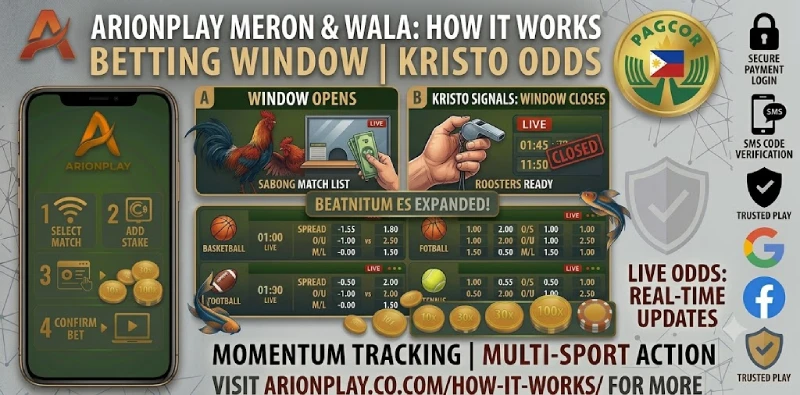
Before each fight, the kristo — the live betting caller in the arena — announces the opening odds for meron and wala and takes verbal bets from the crowd and the platform. On ArionPlay, this process runs through the on-screen betting interface: the meron and wala odds appear in the live room, you select your side and stake in pesos, and confirm before the window closes.
The betting window is open for a short period before each fight and closes before the roosters are released into the pit. No bets are accepted once the window closes. The kristo’s call signals the transition from betting to fighting, so watching the live stream and the platform interface together keeps you on the right timing for each fight.
Once the fight ends and the referee declares a winner, your result settles automatically. Winning bets pay out minus the logro commission. Draw results follow a separate settlement rule covered below.
Payout Structure
Sabong payouts depend on which side wins and whether your pick was llamado or dejado. The table below shows how each result settles.
| Result | Payout rule | Notes |
|---|---|---|
| Your side wins (llamado) | Return minus logro commission | Favourite pays slightly under even money |
| Your side wins (dejado) | Higher return minus logro commission | Underdog pays above even money |
| Opposing side wins | Stake lost | Full stake forfeited |
| Draw / Empate | Partial refund of stake | Typically around 60–70% returned; verify on platform |
The logro is the commission the house takes from winning payouts, typically ranging from around 10% depending on the arena and event. It functions the same as the vig in sports betting — it is how the platform and arena sustain the operation. Your net payout is your gross win minus the logro, so factor this into your expected return when sizing your stake.
Llamado vs Dejado
Llamado and dejado describe the betting status of each rooster, not their physical position in the pit. The llamado is the betting favourite — the side where the majority of money is flowing before the window closes. The dejado is the underdog, where fewer bets are placed and the odds are longer.
In most fights, meron is also the llamado because the stronger rooster is traditionally placed on that side. But upsets happen, and when wala draws more action from the crowd before the window closes, wala becomes the llamado and meron becomes the dejado for that fight. The odds on screen reflect this live shift, so checking the current line rather than assuming meron is always the favourite is part of reading each fight correctly.
Backing the dejado pays more when it wins because the odds are longer, but it wins less often by definition. Experienced sabong bettors watch the kristo’s body language and the crowd’s response to pick spots where the dejado is undervalued relative to the actual form of the rooster — the same logic as backing a sports underdog when the line has moved too far.
How to Read Sabong Odds
Sabong odds are typically expressed as a ratio — for example, 8 to 10 or 10 to 8 — which tells you how much the winning side pays relative to the losing side’s money. An 8 to 10 line means ₱10 bet on the 8 side wins ₱8, while ₱8 bet on the 10 side wins ₱10 before the logro deduction.
On digital e-sabong platforms, odds often appear as a decimal or simplified ratio on the betting interface alongside the meron and wala labels. The higher number is the dejado (underdog), and the lower number is the llamado (favourite). Reading the ratio before placing your peso stake tells you exactly what your return will be before the window closes and the fight starts.
Betting Tips for Meron Wala
Sabong is a fast-moving betting format where discipline matters as much as knowledge. These habits keep your session under control.
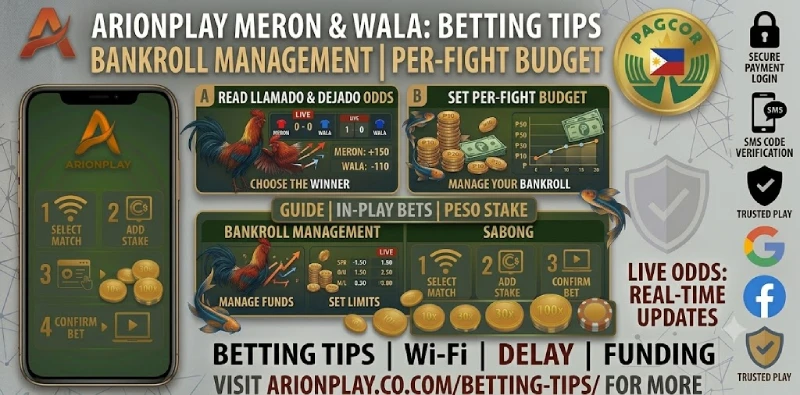
Set a per-fight budget before the first derby of the day and stick to it across every window, regardless of the result of the previous fight. Backing the same side every fight without reading the odds is the fastest way to erode a bankroll — the llamado does not win every time, and a cold streak on your default side hurts more when the odds are tight. Watch several fights before your first bet if you are new to a derby, since arena conditions, handler form, and rooster conditioning all carry information the numbers alone do not show. Never chase a draw loss by doubling your stake on the next fight — the partial refund on a draw is already a smaller loss than a full loss, so treating it as a clean reset is the right mental frame.
Where to Bet Meron Wala Online
You can bet meron and wala at ArionPlay’s e-sabong section, with live derby streams and peso betting through GCash, Maya, or bank transfer from ₱100. See the setup guide at how to watch e-sabong or read the full overview at the online sabong guide.
Frequently Asked Questions
What happens if the fight is declared a draw?
A draw or empate means neither rooster completed the fight within the referee’s ruling. In e-sabong, a partial refund of your stake is typically returned — usually around 60 to 70% — though the exact rule varies by arena. Verify the draw settlement rule on the ArionPlay platform before your first session.
What is logro in sabong?
Logro is the commission deducted from winning sabong payouts, similar to the vig in sports betting. It is how the arena and platform sustain the operation. Your net payout is your gross win minus the logro percentage.
What is the minimum bet on meron wala?
You can fund your ArionPlay account from ₱100 via GCash. The minimum bet per fight window is set by the derby room — check the active room details on the ArionPlay lobby.
Can I bet meron wala with GCash?
Yes. Deposit with GCash on ArionPlay and your peso balance is available for meron and wala bets across active sabong rooms.
Is llamado always on the meron side?
Not always. Llamado describes the betting favourite based on where the money flows before the window closes, not a fixed side. Meron is often the favourite, but wala can become the llamado when the crowd backs it heavily, shifting the odds accordingly.
The Verdict
Meron and wala are the simplest bet in Filipino gaming — pick a side, watch the fight, collect if your rooster wins. The depth comes from reading the llamado and dejado odds, understanding the logro impact on your net return, and managing your stake across a full derby card rather than going heavy on individual fights. For players aged 21 and over. Also see the how to watch e-sabong guide and the online sabong guide.